

First published 18 November 2014. Fully re-reported, fact-checked and expanded — last updated 1 August 2026. All prices, measurements and product links verified on that date.
The era of all men typically dressing the same, and adhering to so-called traditional rules of fashion, is really a thing of the past. With technology becoming essential in many of our lives, knowing how to work with it is the best route to a comfortable lifestyle. For decades, businessmen have latched proudly onto their briefcases on their way out the door each day. They used it as a tool for convenience, and a symbol of professionalism and style. Now, in the realms of increasing technology use around the world, men are grabbing backpacks and putting down their briefcases. Briefcases are by no means over and done with, but they certainly are increasingly left at home.
Though backpacks are flexible and comfortable, they have one major benefit over briefcases: the ability to be hands free. Mobile phones and other gadgets can therefore be used with ease.
Tip: If you are a professional gentleman and are on the fence about getting a backpack, rest assured. You have many options. Sport a black leather backpack for a neat, sleek look. This matches perfectly with your suit, is convenient, and very stylish.
What’s in this guide
- 1. Backpack or briefcase: when each one is right
- 2. What oil-waxed leather actually is
- 3. The backpack, with alternate views
- 4. Construction and what to inspect
- 5. Sizing, capacity and how to wear it
- 6. Dress codes
- 7. Care and patina
1. Backpack or briefcase: when each one is right
The oil waxed beauty in this guide is an example of a backpack that can be worn with style and confidence to the office. The common misconception that backpacks are for kids is outdated. A new take on men’s fashion has really arrived. Menswear is changing with the times, and changing in a way never experienced before.
That said, twelve years on it is clear this was never a case of one replacing the other. Most professionals now own both and choose by the day.
Chart 1 — Backpack versus briefcase
| Leather backpack | Briefcase | |
|---|---|---|
| Hands | Both free | One occupied |
| Weight distribution | Across both shoulders and spine | One shoulder or one hand |
| Comfortable load | Up to about 7–9 kg over distance | Roughly 4 kg before it becomes a nuisance |
| Commute | Walking, cycling, transit, stairs | Car to desk, short walks |
| Formality ceiling | Business professional | Business formal and above |
| Effect on tailoring | Straps crush the shoulder line of a jacket | None |
| Access while standing | Poor — must remove it | Immediate |
| Best for | Laptop plus gym kit, travel days, long commutes | Client meetings, court, formal presentations |
The honest rule: carry the briefcase when the room is the point, carry the backpack when the journey is. A backpack over a tailored jacket will crush the shoulder line and flatten the lapel roll over time, which is why the briefcase still wins for the meeting that matters. Grabbing a leather backpack is an excellent way to signal style while the rest of your outfit respects the office dress code. For the other side of this argument, see our Briefcase Guide For Modern Men and the crocodile pattern briefcase guide.
2. What oil-waxed leather actually is
The technique belongs to a long tradition. Vegetable tanning in Tuscany and the Swedish bark-tanning houses both work oils and waxes into the hide rather than onto it, and the same principle governs English bridle leather. Oil-waxed leather is not a coating applied to the surface. During finishing, the hide is impregnated with oils and waxes that draw down into the fibre structure itself, which is why the effect cannot rub off the way a surface treatment can.
Three consequences follow, and they are the whole reason to choose this material.
Chart 2 — Leather finishes compared
| Finish | Water resistance | Scratches | Patina | Upkeep | Best for |
|---|---|---|---|---|---|
| Oil-waxed | Good — sheds light rain | Mark, then buff out with a thumb | Lightens at corners and stress points | Rewax twice yearly | Daily carry, commuting, weather |
| Full-grain vegetable tanned | Poor untreated | Mark permanently | Deep, darkens with use | Condition quarterly | Heirloom pieces kept indoors |
| Chrome tanned, pigmented | Good | Resist, but scuff to a pale line | Minimal — stays as bought | Wipe clean | Uniform corporate look |
| Suede / nubuck | Poor without spray | Mark and stain readily | Wears shiny at contact points | Brush after each use | Dry climates, occasional wear |
| Coated / bonded | Excellent | Resist, then crack | None — it degrades instead | None possible | Short-term budget carry |
The thumb test: press a fingernail lightly across an oil-waxed panel. It should leave a pale line that vanishes when you rub it with a warm thumb, because body heat redistributes the wax. If the mark stays, it is not genuinely oil-waxed. That self-healing behaviour is the single most useful property of the material for a bag that lives on a train and a floor.
On sourcing, ask whether the hide came from a tannery certified by the Leather Working Group, whose audit standard covers water, energy, waste and restricted substances. For the wider material context, the Victoria & Albert Museum holds significant collections of historic leather goods, and the Museum at FIT documents how accessories move between utility and status object — which is precisely the journey the backpack has made.
3. The backpack, with alternate views
The original version of this article did not show the bag it was about. Here it is, from every available angle.
Luxury Oil Waxed Leather Black Classic Backpack
Genuine cowhide, soft oil-waxed finish, water resistant. Cotton interior, multiple compartments. 12.4 in long × 17.3 in high × 6.5 in wide. $458.


What to look at: the strap mounts on the rear panel and the base corners. Those are the two places a loaded backpack fails first, and no amount of good leather compensates for weak anchoring.
View the Luxury Oil Waxed Leather Black Classic Backpack →
Other directions in the collection

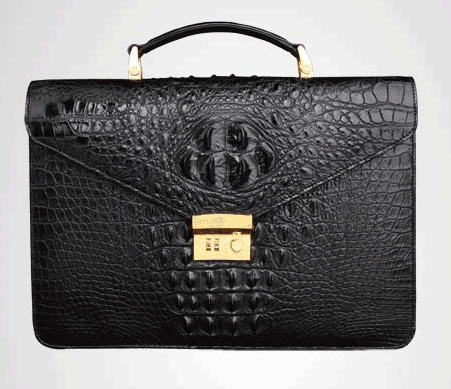

Fashion forward gentlemen have long known that style and comfort are key to dressing and feeling great. Genuine leather luxury backpacks offer a great option as an alternative to briefcases. Staying ahead of men’s fashion trends is one aspect of a modern gentleman’s survival, but embracing comfort and convenience is just as important.
4. Construction and what to inspect
A backpack carries its load through a handful of stress points. Check these five and you will know in a minute whether it survives five years.
Chart 3 — Inspection checklist
| Element | What good looks like | Walk away from |
|---|---|---|
| Strap anchoring | Bar-tacked or box-X stitched into a reinforced panel | Straps stitched to the shell alone |
| Strap padding and width | 38–50 mm wide, padded behind the shoulder | Narrow unpadded straps that dig in under load |
| Base | Doubled leather, or protective feet | Single layer that abrades through |
| Zips | YKK or equivalent, with leather pulls | Unbranded zips; the most common failure of all |
| Lining | Cotton or canvas, padded laptop sleeve | Thin polyester with no device protection |
Stitch density of 7–9 per inch in waxed thread is the benchmark, exactly as on a briefcase. The difference is that a backpack puts all of it under live load every time you pick it up.
5. Sizing, capacity and how to wear it
At 12.4 × 17.3 × 6.5 inches, this is a full-size daily bag — roughly 22 litres, which takes a 15-inch laptop, a folio, a water bottle and a gym change.
Chart 4 — PILAEO bag dimension reference
| Style | Length | Width (depth) | Height | Laptop fit |
|---|---|---|---|---|
| Compact | 11″ | 4″ | 14″ | 13″ |
| Standard | 13″ | 5″ | 16″ | 15″ |
| Travel | 14″ | 6″ | 18″ | 17″ |
| Messenger | 15″ | 4″ | 11″ | 14″ |
Strap height matters more than people think. The base of the bag should sit at the small of your back, not on your backside. Straps set too long drag the weight backwards and pull your shoulders down, which undoes every good thing your jacket is doing. Adjust them properly once and leave them.
Two further rules. Keep the load under about 10% of body weight for a daily commute. And when you arrive, take it off before you enter the room — carrying it by the top handle for the last few metres is the difference between a professional and a commuter.
6. Dress codes
Chart 5 — Where a leather backpack works
| Dress code | Backpack? | Colour | Carry it how | Avoid |
|---|---|---|---|---|
| Black tie | No | — | — | Any bag at all |
| Business formal | To the door, not into the room | Black only | Both straps in transit, top handle on arrival | Wearing it over the suit jacket indoors |
| Business professional | Yes | Black or dark brown | Both straps, sitting high | Slinging one strap; it twists the jacket |
| Smart casual | Yes — the natural habitat | Black, brown, navy | Both straps | Overstuffing until it loses its shape |
| Travel | Yes | Any | Both straps | Exceeding the comfortable load over distance |
| Weekend | Yes | Any | However you like | Nothing |
The one rule that carries across all of it: a backpack and a structured jacket are in tension. Straps compress the shoulder padding and, over months, leave a permanent mark on the lapel roll. If you wear tailoring daily, carry the bag by its top handle for the last stretch, or keep a briefcase for suit days. For jacket pairings, see How to Wear Luxury Blazers.
7. Care and patina
| Frequency | Action | Notes |
|---|---|---|
| After rain | Wipe down, air dry at room temperature | Never near a radiator — heat drives out the wax |
| Weekly | Empty and air the interior | Cotton lining holds moisture from bottles and gym kit |
| As it happens | Buff scratches with a warm thumb or soft cloth | Body heat redistributes wax and closes the mark |
| Every 6 months | Rewax with a leather wax or dubbin, thin coat | Restores water resistance; darkens the leather slightly |
| Every 6 months | Inspect strap anchor points and base corners | The two failure points on any backpack |
| Storage | Stuff lightly, breathable cotton bag, upright | Never plastic; never hang by one strap long-term |
Patina is the point, not damage. Oil-waxed black lightens at the corners, the strap edges and the flap where your hand lands, and after a couple of years no two bags look alike. Rewaxing evens the tone without erasing the history.
Looking to dress the part? You can browse luxury backpacks at PILAEO.
See also: Missoni History Revisited
See also: Luxury Men’s Backpack-Savvy Destinations
Explore How to Wear Luxury Blazers – PILAEO Magazine
Read more: Briefcase Guide For Modern Men
5 Reasons Oil-Waxed Black Leather Backpacks Define Modern Luxury
- Weather Resistance Built Into The FinishOil-waxed leather repels light rain and resists staining better than untreated hides. The wax draws into the grain and reactivates with body heat over time.
- Black Reads Professional In Every ContextA black leather backpack moves cleanly from boardroom to evening dinner to airport without changing register. No other color carries the same range.
- Backpacks Now Accepted In Formal BusinessOnce banished from corporate settings, leather backpacks are now standard among executives, partners, and senior consultants. The shift reflects how men work today.
- Patina Develops Into A SignatureOil-waxed black leather lightens at the corners, edges, and handle wear points over years. The resulting patina makes each bag unique to its owner.
- Investment Construction Lasts DecadesA well-made oil-waxed backpack with proper care outlasts cheap synthetic alternatives by an order of magnitude. The per-year cost approaches zero with longevity.
Frequently asked questions
What is oil-waxed leather, and how is it different from regular leather?
Oil-waxed leather is impregnated with oils and waxes during finishing, so the treatment sits inside the fibre structure rather than on the surface. That makes it water resistant enough to shed light rain, and it gives the leather a self-healing quality: light scratches buff out with a warm thumb because body heat redistributes the wax. A surface coating cannot do this, and it eventually cracks instead.
Is a leather backpack acceptable in a professional office?
Yes, in most modern corporate and creative settings, and it is now common among executives and senior consultants. The caveat is formality: for business formal contexts, carry it to the door and switch to the top handle before you walk into the room. For traditional law, finance or court settings, a briefcase still reads better.
Will a backpack damage my suit jacket?
It can, over time. Straps compress the shoulder padding and can leave a permanent mark on the lapel roll of a structured jacket. If you wear tailoring daily, either carry the bag by its top handle for the last stretch of the commute, or keep a briefcase for suit days. On unstructured or soft-shouldered jackets the effect is much less pronounced.
How do I check the quality of a leather backpack before buying?
Look at five things. Strap anchoring should be bar-tacked or box-X stitched into a reinforced panel, not sewn to the shell alone. Straps should be 38 to 50 mm wide and padded. The base should be doubled leather or have protective feet. Zips should be YKK or equivalent, since unbranded zips are the single most common failure. The lining should be cotton or canvas with a padded laptop sleeve.
What size backpack do I need for daily work?
For a 15-inch laptop plus a folio, water bottle and gym change, roughly 22 litres works, which is about 12 to 13 inches long, 17 inches high and 6 to 7 inches deep. Check your laptop's thickness as well as its diagonal, since a thin 16-inch machine can fit where a chunky 14-inch will not. Keep the loaded weight under about 10 percent of your body weight for a comfortable commute.
How should a backpack sit on my back?
The base should rest at the small of your back, not on your backside. Straps set too long drag the weight backwards and pull your shoulders down, which undoes the line of a good jacket. Adjust them properly once and leave them there. Wear both straps rather than slinging one, which twists the jacket across the chest.
How do I care for oil-waxed leather?
Wipe down and air dry at room temperature after rain, never near a radiator, because heat drives the wax out of the hide. Buff scratches with a warm thumb as they happen. Rewax with a leather wax or dubbin in a thin coat about every six months to restore water resistance, accepting that it darkens the leather slightly. Store stuffed lightly in a breathable cotton bag, upright, and never hang it by one strap long term.
Does oil-waxed leather develop a patina, and can I prevent it?
It does, and you should not want to prevent it. Oil-waxed black lightens at the corners, strap edges and the flap where your hand lands, so after a couple of years no two bags look alike. That wear pattern is the material working as intended rather than degrading. Rewaxing evens the tone without erasing the history.
Backpack or briefcase, which should I buy?
Carry the briefcase when the room is the point and the backpack when the journey is. A backpack spreads seven to nine kilos across both shoulders and leaves your hands free, which suits walking, cycling, transit and stairs. A briefcase tops out around four kilos before it becomes a nuisance, but it reads more formal, gives immediate access while standing, and does not touch your jacket's shoulder line. Most professionals end up owning both.
Can a leather backpack be repaired or made to order?
Repairs are usually straightforward at the failure points, since strap anchors can be re-stitched and linings replaced by any competent leather workshop. Made to order lets you set capacity, compartment layout and strap length to your torso, which is the dimension most often wrong off the shelf. It does not improve leather grade or construction standard, as those are set by the workshop. Confirm the deposit and alteration terms before paying.
